Creamy Cacio e Pepe White Beans: A 15-Minute Skillet Recipe
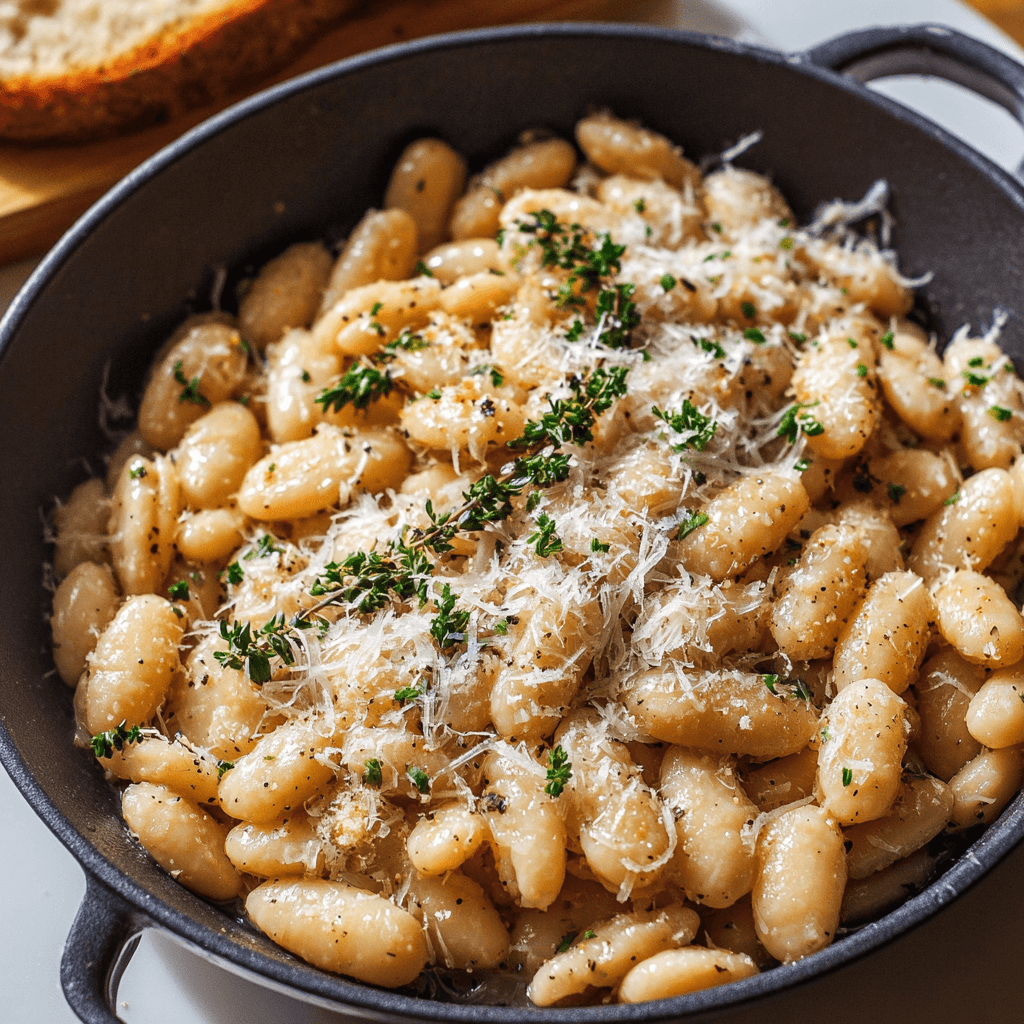
This Cacio e Pepe White Beans skillet transforms a humble can of beans into a restaurant-worthy meal in minutes. It delivers the sharp, salty punch of Pecorino Romano and the warming spice of black pepper in a luxuriously creamy, protein-packed sauce. For another weeknight meal that’s ready in a flash, don’t miss these Easy Sheet Pan Chicken Fajitas.
The Core Technique: Why This Recipe Works
The magic of Cacio e Pepe (cheese and pepper) lies in creating a perfect emulsion—a stable mixture of fat and water. In the classic pasta dish, starchy pasta water is the key. Here, we engineer the same result using the starchy liquid from canned beans.
- Starch is the Emulsifier: The liquid in canned beans is full of starch. When heated, this starch helps bind the fat (from the oil and cheese) with the water, creating a glossy, clump-free sauce that clings to every bean.
- Toasted Pepper is Essential: “Blooming” or toasting the black pepper in fat before adding liquids doesn’t just warm it up; it releases its volatile oils. This dramatically deepens the pepper’s flavor from just “spicy” to complex, floral, and aromatic.
- Off-Heat Mixing is Critical: Adding cheese to a ripping hot skillet will cause it to seize and clump. By mixing off the heat, you allow the cheese to melt gently from the residual heat, ensuring a velvety smooth texture.
Bean Selection: Canned is King
While I often cook beans from scratch, this is one recipe where canned beans are superior for both speed and science.
- Best Beans for This Recipe:
- Cannellini Beans: Top choice. They are creamy, hold their shape well, and have a mild flavor that lets the cheese and pepper shine.
- Great Northern Beans: A great alternative. Slightly smaller and less creamy than cannellini, but they work beautifully.
- Why Canned Wins:
- The Liquid: The starchy packing liquid is a non-negotiable ingredient for creating the sauce.
- Speed: It’s the key to making this a true 15-minute meal.
- Consistency: Canned beans are perfectly cooked and ready to go.
Step-by-Step Instructions
Prep Time: 5 minutes
Cook Time: 10 minutes
Total Time: 15 minutes
- Prep the Ingredients: Finely mince the garlic. Using a microplane or the smallest holes on a box grater, grate the Pecorino Romano cheese into a bowl. Coarsely grind your black pepper. Open the cans of beans; do not drain them.
- Toast the Pepper: Heat the olive oil or butter in a large skillet over medium heat. Add the coarsely ground black pepper and toast for 60-90 seconds, swirling the pan, until it is highly fragrant. This step is crucial for flavor.
- Sauté the Garlic: Add the minced garlic to the skillet and cook for 30 seconds until fragrant, being careful not to let it brown.
- Simmer the Beans: Pour the entire contents of both cans of beans (beans and their liquid) into the skillet. Stir to combine. Bring the mixture to a gentle simmer and let it cook for 3-5 minutes, allowing the liquid to reduce and thicken slightly.
- Create the Emulsion (The Important Part): Turn the heat off completely. Remove the skillet from the hot burner. Let it cool for 1 minute. Add about half of the grated Pecorino Romano to the skillet and stir vigorously and constantly until it has melted into a smooth, creamy sauce.
- Finish the Sauce: Add the remaining cheese and continue stirring vigorously until the sauce is glossy, creamy, and coats the beans. If the sauce is too thick, stir in a tablespoon of hot water at a time until it reaches your desired consistency.
- Serve Immediately: Season with salt if needed (Pecorino is very salty, so taste first). Serve hot, garnished with a drizzle of good olive oil, more black pepper, fresh parsley, and a pinch of lemon zest.
Flavor Elevations: Easy Variations & Add-ins
This dish is a fantastic canvas. Use these additions to customize it to your taste. For a light appetizer to serve before this rich main, these Caprese Stuffed Avocado Halves are a perfect, fresh start.
- Add Leafy Greens: Wilt in a few large handfuls of spinach, arugula, or chopped kale during the last minute of simmering the beans.
- Introduce Protein:
- Stir in shredded rotisserie chicken or some leftover pulled chicken, like the meat from this Sweet Baby Rays Crockpot Chicken recipe.
- Add browned, crumbled Italian sausage.
- Sautéed shrimp or a can of high-quality tuna in olive oil are excellent additions.
- Boost the Umami: Add chopped sun-dried tomatoes, sautéed mushrooms, or a tablespoon of white miso paste along with the garlic.
- Add a Touch of Heat: A generous pinch of red pepper flakes with the black pepper will add a nice background warmth.
Serving Suggestions
Turn this simple skillet into a complete, satisfying meal.
- With Crusty Bread: This is non-negotiable. You need thick slices of sourdough or a crusty baguette for scooping up every last bit of the creamy sauce.
- Over Polenta or Rice: Serve the beans over a bed of soft polenta or simple white rice to soak up the flavors.
- With a Simple Green Salad: A crisp salad with a sharp lemon vinaigrette cuts through the richness of the cheese perfectly.
- As a Side Dish: This skillet works wonderfully as a hearty side dish for grilled chicken, steak, or roasted fish.
And for a truly special dessert to round out your meal, this elegant Chocolate Strawberry Tart recipe is a guaranteed showstopper.
COMMON MISTAKES TO AVOID
- Mistake: The cheese clumped up into a stringy mess.
- Fix: You added the cheese while the pan was too hot. Always remove the skillet from the burner and let it cool for a moment before stirring in the cheese. Use finely grated, room-temperature cheese for the fastest, smoothest melt.
- Mistake: The pepper flavor is weak and one-dimensional.
- Fix: You didn’t toast the pepper. Sizzling the pepper in oil for a minute before adding anything else is what unlocks its complex, aromatic flavor. Use coarsely ground pepper, not fine dust.
- Mistake: Using pre-grated “Parmesan” in a shaker can.
- Fix: Pre-grated cheeses are coated in anti-caking agents (like cellulose) that prevent them from melting smoothly. For Cacio e Pepe, you must grate your own cheese from a block of authentic Pecorino Romano for the correct flavor and texture.
FAQ
Q: Can I use Parmesan instead of Pecorino Romano?
A: You can, but it will change the dish’s flavor profile. Pecorino Romano is a sheep’s milk cheese that is sharper, saltier, and tangier than Parmesan (a cow’s milk cheese). If you use Parmesan, you will likely need to add more salt. For the true Cacio e Pepe experience, Pecorino is essential.
Q: How do I make this vegan?
A: To make a vegan version, use a high-quality vegan parmesan alternative and full-fat, unsweetened oat milk or cashew cream to create the creamy base. You may need to add a bit more nutritional yeast for a “cheesy” flavor and a squeeze of lemon juice to mimic the tang of Pecorino.
Q: What’s the best way to store and reheat leftovers?
A: Store leftovers in an airtight container in the fridge for up to 3 days. Reheat gently in a saucepan over low heat, adding a splash of water or olive oil to loosen the sauce and bring back its creamy consistency. Avoid the microwave, as it can make the sauce separate.
NUTRITIONAL SNAPSHOT
| Nutrient | Amount per Serving |
|---|---|
| Calories | 415 |
| Protein | 22g |
| Fat | 20g |
| Net Carbs | 31g |
| Fiber | 14g |
| Sugar | 2g |
Estimates are for 1/4 of the total recipe and will vary based on exact ingredients used.
Creamy Cacio e Pepe White Beans: A 15-Minute Skillet Recipe
Ingredients
- 2 (15-ounce) cans cannellini beans (undrained)
- 2 tbsp extra virgin olive oil
- 1.5 tbsp coarsely ground black pepper
- 3 cloves garlic (minced)
- 1.5 cups finely grated Pecorino Romano cheese
- Salt to taste
- Optional Garnish: fresh parsley, lemon zest