Why Your Chicken Parmesan Is Watery and How to Fix It Every Time
Chicken Parmesan is an iconic comfort food favorite, but nothing ruins the experience faster than a soggy, watery dish. If you’ve been wondering why your chicken parmesan is watery, you’re not alone. This common issue often stems from moisture management before, during, and after cooking. I’m Linda from Linda’s Crockpot, and here I will walk you through simple fixes and cooking techniques that ensure a perfectly crispy, flavorful chicken parm without excess water. For more easy and cozy dinner ideas, check out my creamy beef and shells recipe for cozy weeknight dinners.
In this detailed guide, you’ll learn practical steps to banish watery chicken parmesan, plus common mistakes, cooking tips, and answers to your burning questions.
Step-by-Step Instructions to Avoid Watery Chicken Parmesan
- Choose the Right Chicken Cut
- Use boneless, skinless chicken breasts or thighs.
- Pound the chicken evenly to about ½ inch thickness for uniform cooking and better moisture control.
- Dry the Chicken Thoroughly
- Pat the chicken completely dry with paper towels before breading.
- Excess surface water traps moisture, leading to soggy breading.
- Salt Early, Not Late
- Lightly salt the chicken at least 15 minutes before breading to draw out surface moisture.
- Pat dry again before coating.
- Proper Breading Technique
- Use a three-step breading process: flour, beaten eggs, and seasoned breadcrumbs.
- Shake off excess flour and breadcrumbs to avoid clumps that hold moisture.
- Fry or Bake at High Heat
- For frying, heat oil to 350°F (175°C) and cook chicken until golden and crisp, about 4-5 minutes per side.
- For baking, use a preheated oven at 425°F (220°C) on a wire rack over a baking sheet to let moisture drip away.
- Don’t Overload with Sauce Immediately
- Add a thin layer of sauce during baking to prevent sogginess.
- Finish with mozzarella and Parmesan cheese; bake just until melted and bubbly.
- Rest Before Serving
- Let chicken parmesan rest 5 minutes after cooking.
- This allows moisture to redistribute evenly for crisp texture retention.
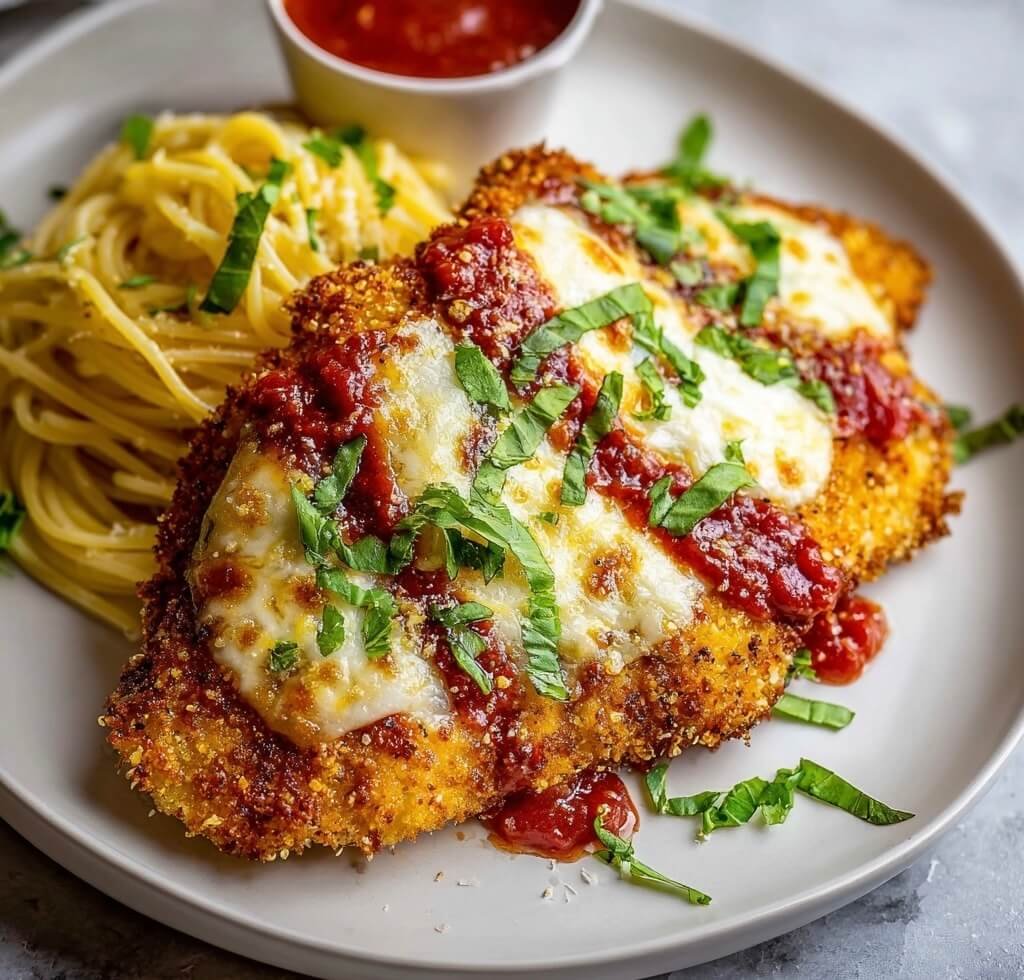
Why Moisture Builds Up in Chicken Parmesan
- Wet Chicken Surface: Not patting dry before breading traps liquid.
- Too Much Sauce: Heavy sauce application before baking breaks down breading.
- Low Cooking Temperature: Cooking chicken at low temp results in condensation.
- No Drainage Method: Baking directly on pans collects steam under chicken.
Avoid these pitfalls by baking on racks or broiling briefly at the end to crisp breading. For a different spin, try my easy low carb shrimp tuscan bake for a flavorful weeknight dinner.
How to Use Sauce Without Making It Watery
- Use thick, well-seasoned marinara without added water or broth.
- Simmer sauce to reduce excess liquid before applying.
- Apply sauce in thin layers between bread and cheese rather than drowning the chicken.
- Consider layering sauce after the breaded chicken is at least partly cooked.
Common Mistakes to Avoid
- Mistake: Skipping the drying step
Fix: Always pat chicken dry before breading. - Mistake: Using watery or thin sauce
Fix: Thicken sauce on stovetop before adding. - Mistake: Overlapping chicken pieces in baking pan
Fix: Use a wire rack for air circulation around each piece.
FAQ
Q1: Can I make chicken parmesan in a crockpot?
A1: While you can, crockpot cooking tends to release moisture, making the dish watery. For a moist but less soggy result, try layering sauce over cooked chicken baked or fried crisp beforehand. For ideas, see my
creamy beef and shells recipe for cozy weeknight dinners.
Q2: How do I keep the breading crispy when reheating leftovers?
A2: Reheat in a 375°F oven on a wire rack for 10-15 minutes, avoiding microwave reheating which makes breading soggy.
Q3: What’s the best cheese for chicken parmesan?
A3: Use mozzarella for meltiness and Parmesan for flavor. Adding a small amount of Pecorino Romano enhances umami. See more cheese-topped recipes like the
perfect cheesy Cajun garlic chicken rotini skillet.
Nutritional Snapshot (Per Serving)
| Nutrient | Amount per Serving |
|---|---|
| Calories | 450 kcal |
| Protein | 45 g |
| Fat | 18 g |
| Net Carbs | 12 g |
| Fiber | 2 g |
| Sugar | 5 g |
Conclusion
Conquering watery chicken parmesan is about moisture control before and during cooking. Follow these expert tips, and you’ll always enjoy crispy, flavorful chicken parm that impresses. For hearty dinner inspiration, try checking out this rustic French garlic soup recipe from Meaty Delights. Got questions or tweaks? Drop a comment, share with friends, and subscribe for more simple, satisfying kitchen strategies.
Why Your Chicken Parmesan Is Watery and How to Fix It Every Time
Ingredients
- 4 boneless skinless chicken breasts (pounded evenly)
- Salt (to taste)
- 1 cup all-purpose flour
- 2 large eggs (beaten)
- 1 ½ cups seasoned breadcrumbs
- 2 cups thick marinara sauce
- 1 ½ cups shredded mozzarella cheese
- ½ cup grated Parmesan cheese
- Olive oil (for frying)