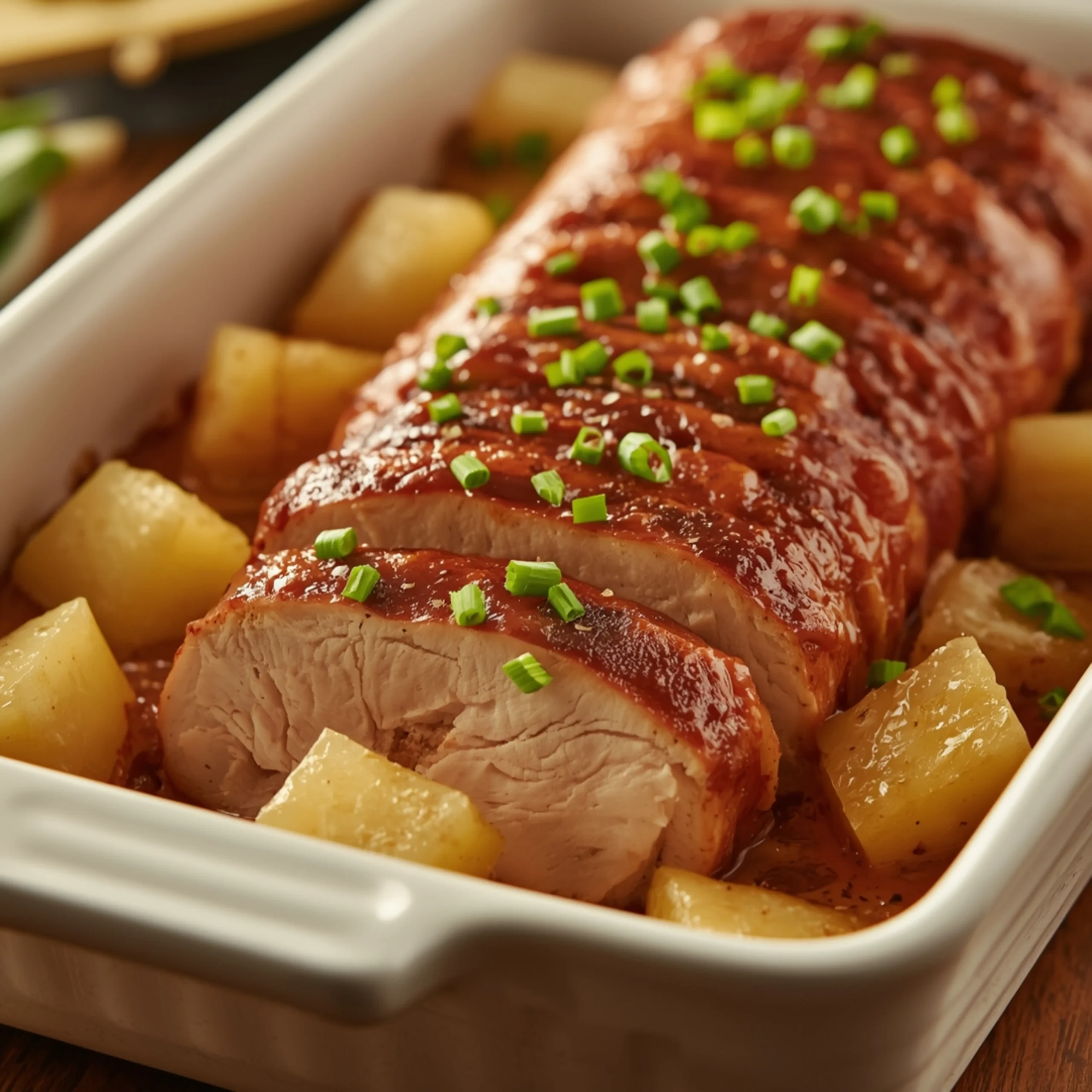
Hawaiian Baked Pork Tenderloin (Sweet, Savory & Perfectly Juicy)
This Hawaiian Baked Pork Tenderloin delivers a powerful punch of sweet and savory flavor with minimal effort. While I love the set-it-and-forget-it magic of a good Crockpot Chicken and Gravy, this oven-roasted recipe is my go-to for a fast, impressive meal that feels like a tropical escape. It’s tender, juicy, and on the table in under an hour.
The Marinade: Your Flavor Foundation
The secret to this dish isn’t complicated—it’s a simple marinade that does all the work. Each ingredient plays a critical role in creating a tender, flavorful result.
- Pineapple Juice: The star player. It contains an enzyme called bromelain, which acts as a natural meat tenderizer, breaking down tough proteins. It also provides the signature sweet, tangy base.
- Soy Sauce (or Tamari): This provides the savory, umami backbone and the necessary salt to season the pork from the inside out.
- Brown Sugar: Balances the saltiness and acidity. It helps create a beautiful, caramelized glaze on the pork as it bakes.
- Garlic & Ginger: These aromatics provide a warm, zesty depth that cuts through the sweetness and elevates the entire flavor profile.
- Sesame Oil: A touch of toasted sesame oil adds a nutty, complex aroma that rounds out the marinade.
Pork Tenderloin vs. Pork Loin: A Critical Difference
Choosing the right cut is non-negotiable for this recipe. Home cooks often confuse these two, leading to dry, tough results.
- Pork Tenderloin: This is the cut you want. It’s a long, narrow, boneless muscle from along the backbone. It’s incredibly lean and tender, and it cooks very quickly. A typical tenderloin weighs about 1 to 1.5 pounds.
- Pork Loin: This is a much larger, wider, and fatter cut from the back of the pig. It’s often sold as a roast (bone-in or boneless) and requires a much longer, slower cooking time. Using it here would result in an undercooked interior and a burnt exterior.
Pro-Tips for Maximum Juiciness
Pork tenderloin is lean, which means it can go from perfect to dry in minutes. Follow these engineering principles for guaranteed success.
- The Sear is Essential: Searing the marinated tenderloin in a hot, oiled skillet before baking creates a delicious brown crust through the Maillard reaction. This step locks in flavor and moisture. Getting this right is just as important as when you’re preparing a show-stopping Herb-Crusted Prime Rib Roast.
- Don’t Over-Marinate: The pineapple juice is an effective tenderizer, but too much of a good thing can turn the meat’s texture mushy. 30 minutes is great, but do not exceed 4 hours.
- Trust the Thermometer, Not Time: The single most important tool for juicy pork is an instant-read meat thermometer. Ovens vary. The only way to know for sure is to pull the pork when the internal temperature hits 145°F (63°C).
- Let It Rest: Once out of the oven, tent the pork with foil and let it rest for 5-10 minutes before slicing. This allows the juices to redistribute throughout the meat, ensuring every slice is moist.
Step-by-Step Instructions
- Prepare the Marinade: In a small bowl, whisk together the pineapple juice, soy sauce, brown sugar, minced garlic, grated ginger, and sesame oil.
- Marinate the Pork: Place the pork tenderloin in a shallow dish or a zip-top bag. Pour the marinade over the pork, ensuring it’s fully coated. Marinate for at least 30 minutes at room temperature, or up to 4 hours in the refrigerator.
- Preheat & Prep: Preheat your oven to 400°F (200°C). Remove the pork from the marinade and pat it dry with paper towels. Crucially, reserve the leftover marinade.
- Sear the Pork: Heat the vegetable oil in a large, oven-safe skillet over medium-high heat. Once the oil is shimmering, carefully place the tenderloin in the skillet. Sear for 2-3 minutes per side, until a golden-brown crust forms all around.
- Make the Glaze: Remove the skillet from the heat. Pour the reserved marinade into the hot skillet. It will bubble and simmer. Let it cook for 1 minute, scraping up any browned bits from the bottom of the pan.
- Bake to Perfection: Spoon some of the glaze from the pan over the top of the tenderloin. Transfer the entire skillet to the preheated oven. Bake for 15-20 minutes, or until an instant-read thermometer inserted into the thickest part reads 145°F (63°C).
- Rest & Serve: Remove the skillet from the oven. Transfer the pork to a cutting board and tent loosely with foil. Let it rest for 5-10 minutes. While it rests, you can simmer the remaining glaze on the stovetop for a few minutes to thicken it slightly. Slice the pork and serve immediately, drizzled with the extra glaze.
Serving & Pairing Blueprint
This versatile dish pairs well with many sides. It’s a fantastic centerpiece for a quick weeknight dinner, and if you’re planning your meals, consider adding these Crockpot Chicken Burrito Bowls for another easy, flavor-packed option later in the week.
- Grains: Steamed jasmine or basmati rice is perfect for soaking up the extra glaze. Quinoa is a great higher-protein option.
- Vegetables: Roasted broccoli, grilled asparagus, or steamed green beans provide a fresh, crisp contrast.
- Salad: A simple green salad with a light vinaigrette keeps the meal feeling fresh and balanced.
For an even heartier meal, you could even explore pairing it with a rich side like this Loaded Creamy Potato Soup.
COMMON MISTAKES TO AVOID
- Mistake: Skipping the sear. Tossing the pork directly into the oven without searing robs you of a massive layer of flavor and a beautiful texture.
Fix: Always sear the tenderloin in a hot pan for 2-3 minutes per side before it goes into the oven. This develops the crust that makes the dish exceptional. - Mistake: Overcooking the pork. Because it’s so lean, pork tenderloin becomes dry and tough just a few degrees past its ideal temperature.
Fix: Use an instant-read thermometer. Pull the pork from the oven the moment it hits 145°F (63°C). The temperature will continue to rise slightly as it rests. - Mistake: Slicing the meat too soon. Cutting into the tenderloin immediately after it comes out of the oven will cause all the delicious juices to run out onto the cutting board.
Fix: Let the pork rest, tented with foil, for 5-10 minutes. This simple step is critical for a juicy result.
FAQ
Q: Can I use canned pineapple chunks or rings instead of juice?
A: Yes. You can use the juice from a can of pineapple. You can also roast the pineapple chunks or grilled rings alongside the pork for a delicious side.
Q: How do I store and reheat leftovers?
A: Store leftover sliced pork in an airtight container in the refrigerator for up to 3 days. Reheat gently in the microwave or in a covered skillet with a splash of water or broth to prevent it from drying out.
Q: Can I prepare this on the grill instead of in the oven?
A: Absolutely. Marinate and sear the pork as directed. Then, transfer it to a preheated grill over medium-high heat. Grill for 10-15 minutes, turning occasionally, until the internal temperature reaches 145°F. Boil the reserved marinade separately on the stove to use as a glaze.
NUTRITIONAL SNAPSHOT
| Nutrient | Amount per Serving |
|---|---|
| Calories | 310 kcal |
| Protein | 38g |
| Fat | 9g |
| Net Carbs | 17g |
| Fiber | 1g |
| Sugar | 15g |
Estimates are for a 4oz serving and may vary.
For those who enjoy exploring different flavor profiles, you might also be interested in this recipe for Slow Cooker Cajun Chicken Alfredo.
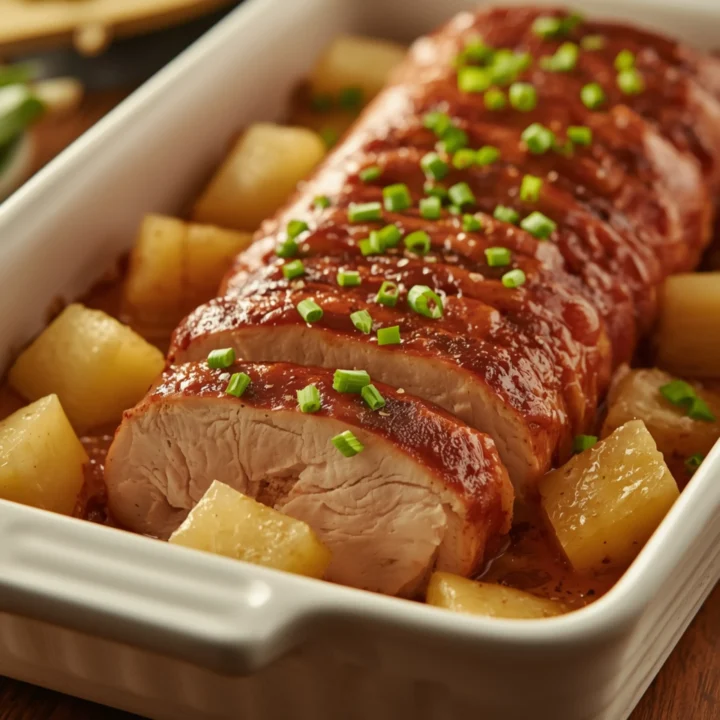
Hawaiian Baked Pork Tenderloin (Sweet, Savory & Perfectly Juicy)
This Hawaiian Baked Pork Tenderloin delivers a powerful punch of sweet and savory flavor with minimal effort. This oven-roasted recipe is a go-to for a fast, impressive meal that feels like a tropical escape. It's tender, juicy, and on the table in under an hour.
Ingredients
- 1 (1.5 lb) pork tenderloin
- 1/2 cup pineapple juice
- 1/3 cup low-sodium soy sauce
- 1/4 cup packed brown sugar
- 3 cloves garlic, minced
- 1 tbsp fresh ginger, grated
- 1 tsp sesame oil
- 1 tbsp vegetable oil
Instructions
- In a small bowl, whisk together the pineapple juice, soy sauce, brown sugar, minced garlic, grated ginger, and sesame oil.
- Place the pork tenderloin in a shallow dish or a zip-top bag. Pour the marinade over the pork, ensuring it's fully coated. Marinate for at least 30 minutes at room temperature, or up to 4 hours in the refrigerator.
- Preheat your oven to 400°F (200°C). Remove the pork from the marinade and pat it dry with paper towels. Crucially, reserve the leftover marinade.
- Heat the vegetable oil in a large, oven-safe skillet over medium-high heat. Once the oil is shimmering, carefully place the tenderloin in the skillet. Sear for 2-3 minutes per side, until a golden-brown crust forms all around.
- Remove the skillet from the heat. Pour the reserved marinade into the hot skillet. It will bubble and simmer. Let it cook for 1 minute, scraping up any browned bits from the bottom of the pan.
- Spoon some of the glaze from the pan over the top of the tenderloin. Transfer the entire skillet to the preheated oven. Bake for 15-20 minutes, or until an instant-read thermometer inserted into the thickest part reads 145°F (63°C).
- Remove the skillet from the oven. Transfer the pork to a cutting board and tent loosely with foil. Let it rest for 5-10 minutes. While it rests, you can simmer the remaining glaze on the stovetop for a few minutes to thicken it slightly. Slice the pork and serve immediately, drizzled with the extra glaze.