
How to Tackle the Problem of a Dirty Kitchen Floor
A dirty kitchen floor can be a major eyesore and a breeding ground for germs. With all the cooking, spills, and foot traffic, keeping your kitchen floor clean can feel like a never-ending battle. However, with the right strategies and cleaning techniques, you can maintain a spotless kitchen floor. Here’s how to tackle the problem of a dirty kitchen floor effectively.
1. Identify the Causes of Dirtiness
Understand the Sources
Before you can effectively clean your kitchen floor, it’s important to understand what contributes to its dirtiness:
- Food Spills: Cooking often leads to spills from ingredients, sauces, and liquids.
- Foot Traffic: People walking in and out of the kitchen can track dirt and debris from other areas of the home.
- Pet Hair and Dander: If you have pets, their hair and dander can accumulate on the floor.
- Grease Buildup: Cooking can leave grease on the floor, especially near the stove.
Tip
Keep a checklist of common sources of dirt in your kitchen to help you address them more effectively.
2. Establish a Regular Cleaning Routine
Consistency is Key
Having a consistent cleaning routine can help keep your kitchen floor looking its best:
- Daily Sweeping or Vacuuming: Sweep or vacuum your kitchen floor daily to remove crumbs, dirt, and debris.
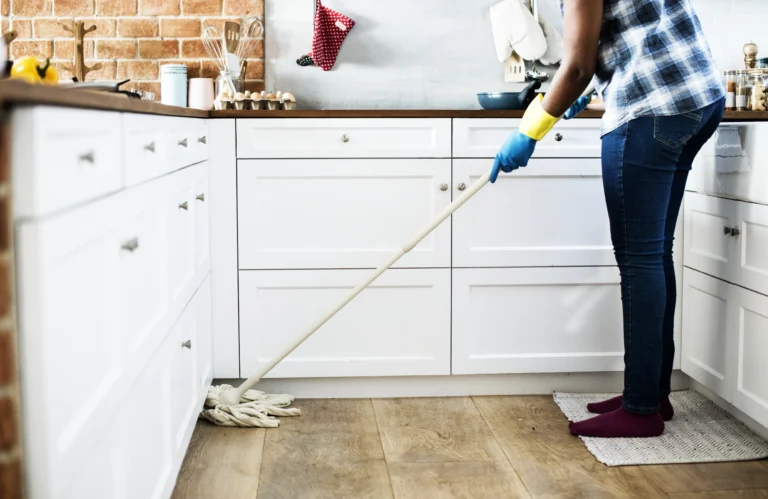
- Mopping: Mop the floor at least once a week, or more frequently if spills occur. This helps remove sticky residue and grime.
- Spot Cleaning: Address spills and stains immediately to prevent them from setting in.
Tip
Set a specific day and time each week for deep cleaning the kitchen floor to make it a habit.
3. Choose the Right Cleaning Tools
Equip Yourself
Using the right tools can make a significant difference in cleaning efficiency:
- Broom and Dustpan: A good broom and dustpan set is essential for daily sweeping.
- Vacuum Cleaner: A vacuum with a hard floor setting can effectively remove dirt and debris.
- Mop: Choose a mop suitable for your floor type, whether it’s a traditional mop, microfiber mop, or steam mop.
- Cleaning Solution: Use a floor cleaner appropriate for your flooring material (tile, hardwood, laminate, etc.).
Tip
Consider using a mop with a washable pad to reduce waste and save money on disposable pads.
4. Use the Right Cleaning Solutions
Choose Effective Products
The cleaning solution you use can impact how effectively you clean your kitchen floor:
- All-Purpose Cleaner: An all-purpose cleaner can tackle a variety of messes, including grease and stains.
- Vinegar and Water: A mixture of vinegar and water is a natural and effective cleaner for many types of floors.
- Commercial Floor Cleaners: For tough stains, consider using a commercial floor cleaner specifically designed for your floor type.
Tip
Always follow the manufacturer’s instructions for any cleaning products to avoid damaging your floor.
5. Address Specific Stains and Buildup
Target Problem Areas
Certain areas of the kitchen floor may require special attention:
- Grease Stains: For greasy spots, apply a degreaser or a mixture of baking soda and water, let it sit for a few minutes, then scrub and rinse.
- Sticky Residue: Use a mixture of vinegar and warm water to help dissolve sticky residues from spills.
- Grout Lines: If you have tile floors, clean grout lines with a toothbrush and a paste of baking soda and water.
Tip
For persistent stains, let the cleaning solution sit for a longer period to penetrate and break down the dirt.
6. Implement Preventive Measures
Reduce Dirt Accumulation
Taking steps to prevent dirt from accumulating can save you time and effort in cleaning:
- Use Mats: Place mats at entry points to catch dirt and debris before it reaches the kitchen floor.
- Designate a Shoe-Free Zone: Consider implementing a no-shoes policy in the kitchen to minimize dirt tracked onto the floor.
- Regular Pet Grooming: If you have pets, regular grooming can reduce the amount of hair and dander that ends up on the floor.
Tip
Encourage family members to help keep the kitchen clean by wiping their feet or taking off shoes before entering.
7. Consider Professional Cleaning
When to Call for Help
If your kitchen floor is still dirty despite your best efforts, it may be time to consider professional cleaning:
- Deep Cleaning Services: A professional cleaning service can handle deep cleaning tasks, including tough stains and buildup.
- Floor Restoration: For certain types of floors, such as hardwood or tile, a professional restoration service can rejuvenate the surface.
Tip
Research local cleaning services and read reviews to find a reputable company that specializes in floor cleaning.
Conclusion
A dirty kitchen floor doesn’t have to be a constant issue. By understanding the causes, establishing a regular cleaning routine, and using the right tools and techniques, you can maintain a clean and inviting kitchen. Implementing preventive measures will further reduce dirt accumulation and make your cleaning efforts more effective. With dedication and the right approach, you can enjoy a spotless kitchen floor that enhances your cooking experience!