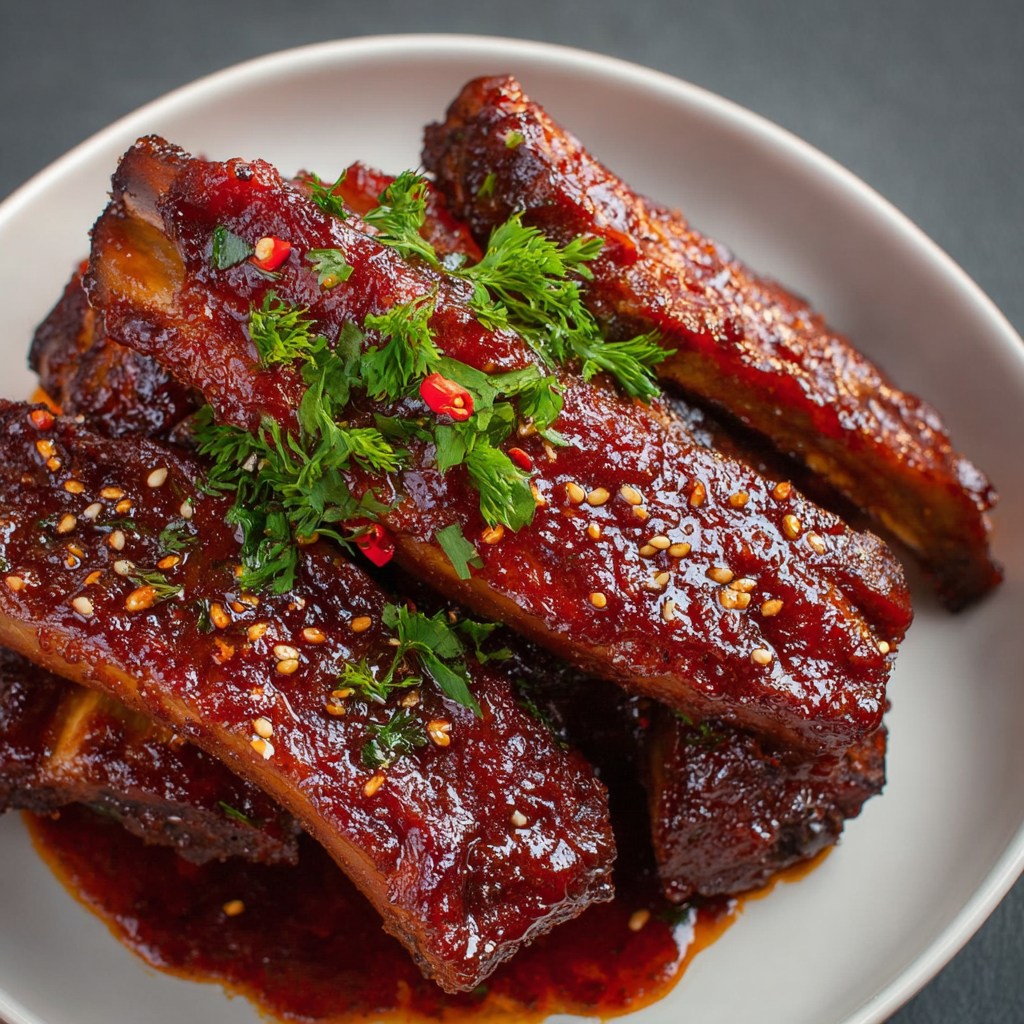
Spicy Braised Pork Ribs: A Guide to Fall-Apart Tender Results
These spicy braised pork ribs are the definition of comfort food: sticky, savory, sweet, and so tender they melt off the bone. This recipe uses a simple braising technique to build incredibly deep flavor with minimal effort, much like the method behind our fan-favorite, rich and tender Crockpot Beef Birria Tacos. It’s the perfect low-and-slow weekend meal that delivers spectacular results.
The Anatomy of a Perfect Braise
Braising isn’t a recipe; it’s a technique. Understanding the why behind each step guarantees success every time. It’s a simple two-stage cooking method that transforms tough cuts of meat into something truly special.
- Stage 1: The Sear. This is non-negotiable. Searing the ribs in a hot pan creates the Maillard reaction, a chemical process that develops hundreds of complex flavor and aroma compounds. This deep, brown crust is the foundation of your entire dish.
- Stage 2: The Simmer. After searing, the meat is partially submerged in a flavorful liquid and cooked at a very low temperature for a long time. This slow, moist heat breaks down tough connective tissues (collagen) into silky gelatin, resulting in that signature fall-apart texture.
Choosing Your Ribs: Spareribs vs. Baby Backs
The cut of rib you choose will impact cooking time and final texture. Both work, but here’s the engineering breakdown:
- Pork Spareribs: Cut from the belly section, they are larger, meatier, and contain more fat and connective tissue. This makes them an ideal candidate for low-and-slow braising, as the fat and collagen render down beautifully, creating a richer, more succulent result. They may require slightly longer cooking.
- Baby Back Ribs: These are smaller and leaner, cut from where the rib meets the spine. They cook a bit faster and are naturally more tender, but can dry out if overcooked. If using baby backs, start checking for doneness about 30-45 minutes earlier.
Customizing the Spice & Sweetness
This recipe is a template. Adjust the core flavor components to match your preference.
- For More Heat:
- Increase the gochujang or add a teaspoon of gochugaru (Korean chili flakes).
- Add a few whole dried chiles (like chiles de árbol) to the braising liquid.
- Incorporate a finely minced fresh hot pepper (like a serrano) with the garlic and ginger.
- For More Sweetness:
- Increase the brown sugar or honey.
- A tablespoon of mirin or a splash of apple juice can also add a nice, nuanced sweetness to the braising liquid.
- For Deeper Umami:
- Add a tablespoon of Worcestershire sauce or a teaspoon of miso paste to the sauce.
- Use beef or mushroom broth instead of chicken broth for a richer background flavor.
Step-by-Step Instructions
- Prep the Ribs: Pat a 3-4 lb rack of pork spareribs completely dry with paper towels. If the thin, papery membrane is still on the bone-side of the rack, use a butter knife to lift a corner and a paper towel to grip and pull it off. Cut the rack into individual or two-rib sections. Season all sides generously with salt and black pepper.
- Sear for Flavor: Heat 2 tablespoons of neutral oil (like canola or avocado) in a large Dutch oven or heavy-bottomed pot over medium-high heat. Working in batches to avoid crowding the pan, sear the ribs on all meaty sides until deeply browned, about 2-3 minutes per side. Transfer seared ribs to a plate and set aside.
- Build the Aromatic Base: Lower the heat to medium. Add 1 tablespoon of minced ginger and 5-6 cloves of minced garlic to the pot. Sauté for 30-60 seconds until fragrant, scraping up any browned bits from the bottom of the pot.
- Create the Braising Liquid: Pour in 1/2 cup soy sauce, 1/4 cup rice vinegar, and 1/4 cup gochujang. Whisk to combine with the aromatics. Stir in 1/3 cup packed brown sugar, 2 tablespoons honey, and 1 teaspoon of red pepper flakes until the sugar is mostly dissolved.
- Simmer & Braise: Return the seared ribs to the pot, arranging them in a snug layer. Pour in enough chicken or beef broth to come about halfway up the sides of the ribs (approx. 2-3 cups). Bring the liquid to a gentle simmer.
- Low & Slow: Once simmering, reduce the heat to low, cover the pot, and let it braise for 2.5 to 3 hours. The ribs are done when a fork can be inserted with no resistance and the meat is pulling away from the bone.
- Finish the Sauce: Carefully remove the tender ribs from the pot and set them aside on a platter. Skim any excess fat from the surface of the braising liquid. Bring the remaining liquid to a boil over medium-high heat. Cook, stirring occasionally, for 10-15 minutes, or until the sauce has reduced by about half and thickened into a glaze that coats the back of a spoon.
- Serve: Pour the thickened glaze over the ribs. Garnish with toasted sesame seeds and thinly sliced green onions.
Serving & Pairing Essentials
The rich, bold flavor of these ribs pairs well with simple sides that can soak up the delicious sauce.
- Starch: Steamed jasmine or basmati rice is classic. For a creamier option, try mashed potatoes or polenta. A bed of creamy lemon parmesan orzo also provides a bright, tangy contrast to the spicy-sweet glaze.
- Vegetables: A crisp, simple green vegetable cuts through the richness. Think steamed broccoli, sautéed bok choy, or a quick cucumber salad.
- Meal Planning: If you enjoy planning flavorful, protein-packed meals, keep our recipe for quick Greek Turkey Meatballs in mind for a busy weeknight.
COMMON MISTAKES TO AVOID
Mistake: Skipping the initial sear.
Fix: Do not skip this step. The deep browning (Maillard reaction) from searing the ribs is where the majority of the dish’s complex, savory flavor comes from. Pale, boiled meat is a direct result of skipping the sear.
Mistake: Boiling the ribs instead of simmering.
Fix: Keep the heat on low. A rapid boil will tighten the muscle fibers and make the meat tough and dry, even when cooked in liquid. You are looking for a “lazy bubble” simmer, where a bubble breaks the surface only every few seconds.
Mistake: Serving the watery braising liquid as-is.
Fix: Always reduce the sauce. After removing the cooked ribs, crank up the heat and boil the liquid down. This concentrates the flavor and thickens the consistency into a rich, syrupy glaze that clings to the meat.
FAQ
Q: Can I make this in a slow cooker?
A: Absolutely. Follow steps 1-4 on the stovetop. Transfer the seared ribs and the braising liquid to your slow cooker. Add the broth and cook on LOW for 6-8 hours or HIGH for 3-4 hours. You will still need to reduce the sauce in a saucepan on the stove at the end for the best glaze.
Q: What’s a good substitute for gochujang?
A: Gochujang has a unique fermented, spicy, and slightly sweet flavor. In a pinch, you can substitute with a mixture of Sriracha or another chili paste, a small amount of miso paste for the umami, and a pinch of sugar for the sweetness. The flavor won’t be identical, but it will work.
Q: I cooked them for 3 hours and they aren’t falling off the bone. What went wrong?
A: Cook to temperature and texture, not just to time. The collagen in some racks of ribs can be tougher and may require more time to break down. If they aren’t tender enough, simply put the lid back on and continue simmering, checking every 30 minutes.
NUTRITIONAL SNAPSHOT
| Nutrient | Amount per Serving |
|---|---|
| Calories | 680 kcal |
| Protein | 42g |
| Fat | 45g |
| Net Carbs | 24g |
| Fiber | 1g |
| Sugar | 21g |
(Nutritional values are estimates and can vary based on the specific cut of ribs and ingredients used.)
After a rich, savory meal like this, you might be looking for a lighter touch for your next meal or dessert. Consider a simple and comforting one-pot chicken and dumpling soup for a cozy weeknight dinner, or finish the evening with a slice of delicate lemon coconut macaron cake for a perfect sweet ending.
Spicy Braised Pork Ribs: A Guide to Fall-Apart Tender Results
Ingredients
- 3-4 lbs pork spareribs
- 2 tbsp neutral oil
- salt and pepper to taste
- 1 tbsp minced ginger
- 6 cloves garlic, minced
- 1/2 cup low-sodium soy sauce
- 1/4 cup rice vinegar
- 1/4 cup gochujang (Korean chili paste)
- 1/3 cup packed brown sugar
- 2 tbsp honey
- 1 tsp red pepper flakes
- 2-3 cups low-sodium chicken or beef broth
- toasted sesame seeds for garnish
- sliced green onions for garnish