Sweet & Sticky Pineapple Brown Sugar Pork Tenderloin (Baked)
This Pineapple and Brown Sugar Baked Pork Tenderloin delivers a powerful sweet and savory punch with minimal effort. It creates a sticky, caramelized glaze that coats tender, perfectly cooked pork. If you already love the simple elegance of my Crockpot Brown Sugar Balsamic Glazed Pork Tenderloin, you’ll find this tropical version an irresistible new favorite.
The Glaze Equation: Balancing Sweet, Tangy, and Savory
The magic of this dish is in the glaze. It’s a simple formula, but each component plays a critical role. Understanding the “why” helps you master the recipe.
- Sweet (Brown Sugar): Provides the deep, molasses-rich sweetness and is essential for the sticky, caramelized texture. The sugar undergoes the Maillard reaction in the oven’s heat, creating complex flavor and a beautiful dark crust.
- Tangy (Pineapple Juice): The acid in the pineapple juice cuts through the richness of the pork and balances the sugar. It also contains bromelain, an enzyme that acts as a natural tenderizer.
- Savory (Soy Sauce): This adds umami depth and a salty backbone that prevents the glaze from becoming one-dimensionally sweet.
- Aromatics (Garlic & Ginger): These provide a warm, fragrant layer of flavor that complements both the pineapple and the pork.
Pork Tenderloin Prep: The Non-Negotiable Steps
Proper preparation is the difference between good and great pork tenderloin. Don’t skip these two critical steps.
-
Trim the Silver Skin: Pork tenderloin has a thin, shimmering membrane on its surface called silver skin. It does not render or break down during cooking. If left on, it will shrink, causing the tenderloin to curl and become tough.
- How-To: Slide a thin, sharp knife just under the silver skin. Angle the blade slightly upward and slice along the length of the membrane to remove it.
-
Pat it Dry: Before searing, use paper towels to pat the entire surface of the tenderloin until it’s completely dry.
- Why it Matters: A dry surface is essential for achieving a fast, hard sear. Moisture creates steam, which prevents the meat from browning properly. A good sear builds a flavorful crust (fond) that enhances the entire dish.
Step-by-Step Instructions
- Prep: Preheat your oven to 400°F (200°C). Pat the pork tenderloin completely dry with paper towels and trim off any excess fat or silver skin. Season generously on all sides with salt and pepper.
- Sear the Pork: Heat olive oil in a large, oven-safe skillet over medium-high heat. Once shimmering, carefully place the tenderloin in the pan. Sear for 2-3 minutes per side, until a golden-brown crust forms. Remove the pork from the skillet and set aside.
- Create the Glaze: In the same skillet (off the heat), whisk together the pineapple juice, brown sugar, soy sauce, minced garlic, and grated ginger.
- Thicken: In a small bowl, mix the cornstarch with 2 tablespoons of cold water to create a slurry. Whisk this slurry into the glaze mixture in the skillet.
- Simmer: Return the skillet to medium heat and bring the glaze to a simmer, stirring constantly. Cook for 1-2 minutes until it has thickened slightly.
- Glaze & Bake: Return the seared pork tenderloin to the skillet. Spoon about half of the glaze over the top of the pork.
- Bake: Transfer the skillet to the preheated oven. Bake for 15-20 minutes, or until the internal temperature reaches 145°F (63°C) on a meat thermometer.
- Rest: Remove the pork from the oven and transfer it to a cutting board. Let it rest for at least 10 minutes. This is crucial for locking in the juices.
- Serve: While the pork rests, you can warm the remaining glaze in the skillet. Slice the tenderloin against the grain into ½-inch medallions and serve immediately, drizzled with the extra glaze.
Serving & Pairing Blueprint
This dish pairs beautifully with sides that can soak up the delicious glaze or offer a fresh contrast.
-
Starch:
- Coconut Rice: Leans into the tropical theme.
- Jasmine Rice: A simple, fragrant base.
- Roasted Sweet Potatoes: Complements the brown sugar notes.
-
Vegetables:
- Roasted Broccoli or Asparagus: The slight char from roasting balances the sweetness.
- Steamed Green Beans: A simple, crisp, and clean-tasting side.
-
Appetizer Kick-Off:
- To set a decadent tone for the meal, an appetizer like these impressive Fried Goat Cheese Balls with Spicy Honey offers a creamy, tangy contrast before the main course.
Slow Cooker Adaptation
While this recipe is optimized for the oven’s high heat, you can easily adapt it for your crockpot for a more hands-off approach. It’s a perfect strategy for busy days, much like my favorite Crockpot Mississippi Pot Roast.
- Sear First: Complete steps 2-4 (searing the pork and making the glaze) on the stovetop. This is essential for flavor development.
- Slow Cook: Place the seared tenderloin in your crockpot. Pour the prepared glaze over the top.
- Cook Time: Cook on LOW for 2-3 hours. Pork tenderloin is very lean and will dry out if overcooked, so check the internal temperature early. It should reach 145°F.
- Thicken Sauce (Optional): The sauce may be thinner in the crockpot. If you want a thicker glaze, remove the pork and pour the liquid into a small saucepan. Bring to a simmer on the stovetop and cook for 3-5 minutes until reduced.
COMMON MISTAKES TO AVOID
-
Mistake: Skipping the sear. Searing isn’t just about cooking the outside; it’s about building a deep, caramelized flavor base through the Maillard reaction.
- Fix: Always sear the tenderloin in a hot pan for 2-3 minutes per side before baking or slow cooking.
-
Mistake: Not resting the pork. Slicing into the tenderloin immediately after it comes out of the oven will cause all the delicious juices to run out onto your cutting board.
- Fix: Tent the pork loosely with foil and let it rest for 10 minutes before slicing. This allows the muscle fibers to relax and reabsorb the juices.
-
Mistake: Using pork loin instead of tenderloin. While both are great cuts, pork loin is larger, thicker, and requires a much longer cooking time. Using it in this recipe will result in undercooked meat.
- Fix: Double-check your packaging. Pork tenderloin is long and thin, typically weighing 1 to 1.5 pounds.
FAQ
Q: Can I use fresh pineapple?
A: Yes, but with a caveat. Fresh pineapple juice is more acidic and contains more active bromelain, which can alter the texture of the pork if marinated too long. For this glaze, it’s fine. Use about 1 cup of blended fresh pineapple.
Q: How do I know for sure when the pork is done?
A: The only foolproof method is an instant-read meat thermometer. Pork tenderloin is perfectly cooked and safe to eat when the internal temperature in the thickest part reaches 145°F (63°C). The flesh will be tender and slightly pink in the center.
Q: What are some good side dish ideas beyond rice?
A: This pairs wonderfully with roasted vegetables like broccoli or asparagus. For a fantastic and flavorful vegetarian option, consider serving it alongside these Spinach and Cheese Stuffed Portobello Mushrooms, which can bake in the oven at the same time.
NUTRITIONAL SNAPSHOT
(Estimates are per serving, assuming 4 servings per tenderloin)
| Nutrient | Amount per Serving |
|---|---|
| Calories | 385 |
| Protein | 38g |
| Fat | 10g |
| Net Carbs | 34g |
| Fiber | 1g |
| Sugar | 32g |
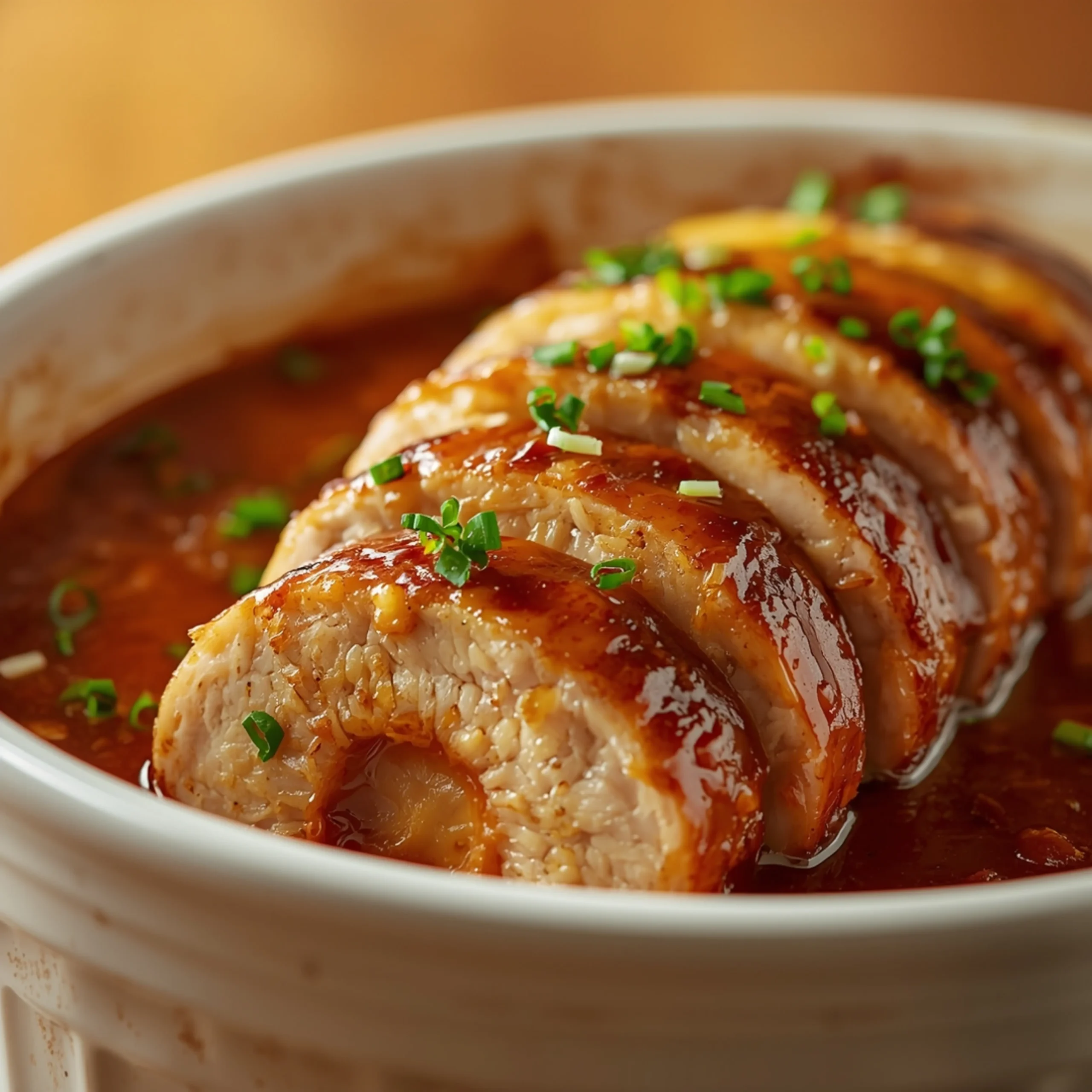
Sweet & Sticky Pineapple Brown Sugar Pork Tenderloin (Baked)
This Pineapple and Brown Sugar Baked Pork Tenderloin delivers a powerful sweet and savory punch with minimal effort. It creates a sticky, caramelized glaze that coats tender, perfectly cooked pork. If you already love the simple elegance of my Crockpot Brown Sugar Balsamic Glazed Pork Tenderloin, you'll find this tropical version an irresistible new favorite.
Ingredients
- 1 (1.5 lb) pork tenderloin
- 1 cup pineapple juice
- 1/2 cup packed brown sugar
- 1/4 cup low sodium soy sauce
- 1 tbsp cornstarch
- 1 tsp grated fresh ginger
- 2 cloves garlic, minced
- 1 tbsp olive oil
- Salt and black pepper to taste
Instructions
- Preheat your oven to 400°F (200°C). Pat the pork tenderloin completely dry with paper towels and trim off any excess fat or silver skin. Season generously on all sides with salt and pepper.
- Heat olive oil in a large, oven-safe skillet over medium-high heat. Once shimmering, carefully place the tenderloin in the pan. Sear for 2-3 minutes per side, until a golden-brown crust forms. Remove the pork from the skillet and set aside.
- In the same skillet (off the heat), whisk together the pineapple juice, brown sugar, soy sauce, minced garlic, and grated ginger.
- In a small bowl, mix the cornstarch with 2 tablespoons of cold water to create a slurry. Whisk this slurry into the glaze mixture in the skillet.
- Return the skillet to medium heat and bring the glaze to a simmer, stirring constantly. Cook for 1-2 minutes until it has thickened slightly.
- Return the seared pork tenderloin to the skillet. Spoon about half of the glaze over the top of the pork.
- Transfer the skillet to the preheated oven. Bake for 15-20 minutes, or until the internal temperature reaches 145°F (63°C) on a meat thermometer.
- Remove the pork from the oven and transfer it to a cutting board. Let it rest for at least 10 minutes. This is crucial for locking in the juices.
- While the pork rests, you can warm the remaining glaze in the skillet. Slice the tenderloin against the grain into ½-inch medallions and serve immediately, drizzled with the extra glaze.