Why Doesn’t My Lasagna Hold Its Shape? Tips for Perfect, Sliceable Layers Every Time
Lasagna is a classic comfort dish, but one common problem home cooks face is that it doesn’t hold its shape when served. If you’re asking, why doesn’t my lasagna hold its shape?, you’re not alone. This sticky, hearty dish can be tricky to slice neatly, especially when it’s still hot and fresh from the oven. For reliable, satisfying lasagna every time, understanding the reasons behind this issue is key. If you love slow-cooked, flavorful meals, be sure to check out my simple and flavorful black pepper chicken with mushrooms in your crockpot for an easy dinner win.
Lasagna’s trouble holding shape usually boils down to the moisture content, ingredient ratios, and the layering technique. Each plays a critical role in the final firmness and sliceability. Adjusting these elements can help you avoid a runny, falling-apart lasagna and instead deliver neat, delicious portions that hold together flawlessly.
Step-by-Step Instructions to Make Lasagna That Holds Its Shape
- Choose the Right Noodles
- Use no-boil noodles or cook regular noodles al dente (slightly firm).
- Avoid overcooking noodles to prevent them from breaking down and releasing excess starch.
- Prevent Excess Moisture
- Drain excess liquid from meat sauces or vegetables before layering.
- Use ricotta cheese that is well-drained or mixed with egg to bind.
- Avoid watery mozzarella; pat it dry with paper towels.
- Layer Smartly and Tightly
- Build layers evenly and press down gently to compact the ingredients without squeezing out moisture.
- Overcrowd layers with too much sauce or cheese, which can cause spreading.
- Use Egg as a Binder Inside the Cheese Mixture
- Mix eggs into ricotta or cottage cheese. Eggs create a custard-like texture and hold the cheese layer firm during baking.
- Bake Properly
- Cook covered with foil for most of the baking time to trap steam and prevent drying out.
- Remove foil for the last 10–15 minutes to brown the top and let excess moisture evaporate.
- Cool Before Slicing
- Let the lasagna rest for at least 15-20 minutes after baking. Cooling helps it set and makes cutting clean, solid slices possible.
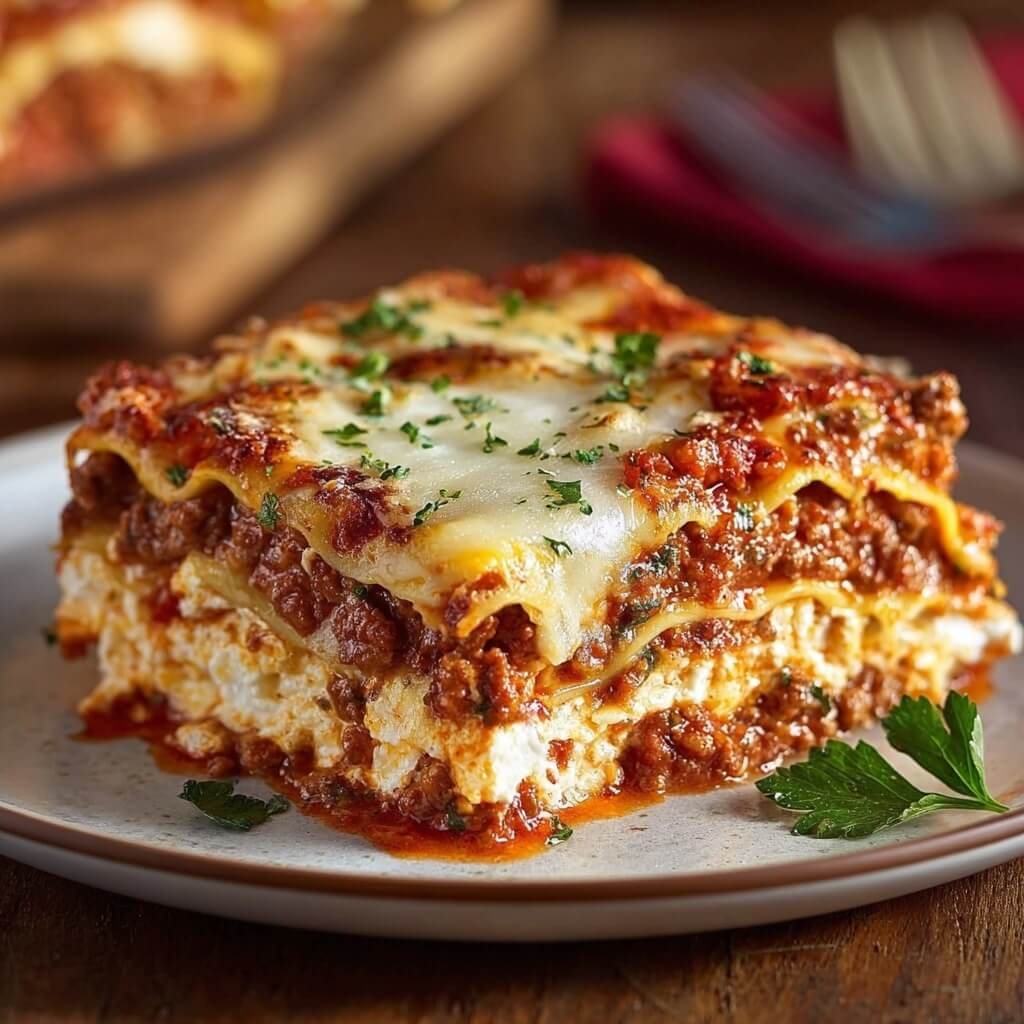
Key Ingredient Adjustments for a Firmer Lasagna
- Cheese: Combine ricotta with a beaten egg and mix in grated Parmesan for extra structure. Avoid low-fat cheeses that can be too watery.
- Sauce: Use thick, slow-simmered tomato sauce — check out my low-carb chicken casserole recipe for ideas on reducing moisture in casseroles.
- Meat: Brown and drain ground beef or sausage thoroughly before mixing it into your sauce.
- Vegetables: Roast or sauté vegetables to reduce water content before layering.
How Texture and Doneness Affect Lasagna Shape
- Well-cooked noodles that retain some bite prevent mushiness and sogginess.
- A balanced mix of meat, cheese, and sauce avoids a runny final product.
- Don’t overbake; lasagna continues to firm up as it cools but overbaking dries it out.
External Expert Tip: For Entertaining, Try Crispy Ham & Cheese Puff Pastry Stacks
If you want an additional showstopper that complements your main dish, try crispy ham cheese puff pastry stacks. They offer a textural contrast and are an easy crowd-pleaser.
Common Mistakes to Avoid
- Mistake: Using watery ricotta or skipping egg binder.
Fix: Add eggs to cheese mixtures to create a firmer, sliceable layer.
- Mistake: Over-soaking or over-boiling noodles.
Fix: Cook noodles al dente or use no-boil noodles per package instructions.
- Mistake: Cutting lasagna too soon after baking.
Fix: Let the lasagna rest 20 minutes for cleaner, firmer slices.
FAQ
Q: Can I use pre-shredded cheese in lasagna?
A: Yes, but pre-shredded cheese often contains anti-caking agents that might affect melting texture. For best results, use freshly shredded cheese.
Q: How do I thicken watery meat sauce for lasagna?
A: Simmer sauce uncovered to reduce moisture. Browning meat and draining fat before adding sauce also helps. For more strategies on hearty layered dishes, check this 15-minute garlic butter chicken bites guide.
Q: What is the best way to reheat leftover lasagna?
A: Reheat covered with foil in the oven at 350°F until warmed through, or microwave covered. For more casserole and comfort food tips, try this shrimp mac and cheese recipe for inspiration.
Nutritional Snapshot (per serving)
| Nutrient | Amount per Serving |
|---|---|
| Calories | 380 |
| Protein | 25g |
| Fat | 18g |
| Net Carbs | 22g |
| Fiber | 3g |
| Sugar | 7g |
Conclusion
Fixing why your lasagna doesn’t hold its shape is simple once you control moisture, use binders like egg, and let it rest properly. These adjustments bring a solid, sliceable dish you can proudly serve. If you want more inventive and easy meal ideas, explore this easy lemon rice krispy treats recipe for a sweet finish after your lasagna feast.
Feel free to share your results, ask questions, or subscribe for more no-fail tips and comforting recipes!
Why Doesn’t My Lasagna Hold Its Shape? Tips for Perfect, Sliceable Layers Every Time
Ingredients
- no-boil lasagna noodles or 12 regular noodles cooked al dente
- 1 lb ground beef or Italian sausage, browned and drained
- 2 cups ricotta cheese, well-drained
- 1 large egg (to bind ricotta)
- 2 cups shredded mozzarella cheese, patted dry
- 1/2 cup grated Parmesan cheese
- 4 cups thick tomato sauce (slow-simmered preferred)
- Salt and pepper to taste
- Optional: 1 cup roasted vegetables (zucchini, mushrooms, spinach), well-drained